Every distributor, integrator, and developer eventually reaches the same realization: the supplier they chose for price is not always the supplier that delivers. A trading company can offer an attractive quotation, but when a customization request arrives, a technical question needs answering, or a delivery date slips, the answer often comes back as “let me check with the factory”—and the factory is someone else’s.
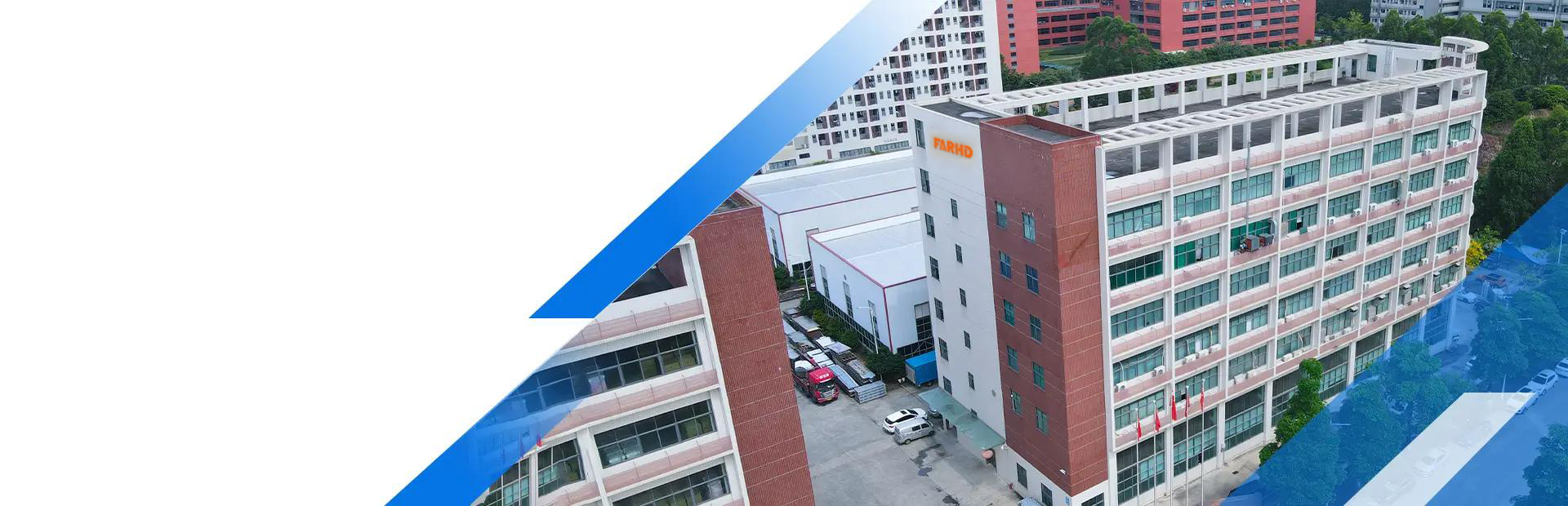
FARHD’s position is simpler than that. We are the factory. When you work with us, you work directly with the production lines that build your products—no intermediary relaying questions, no margin layered between your cost and the manufacturing floor, and no gap between the specification you agreed and the specification that gets built.
For partners evaluating a source factory relationship, this article explains what “direct from the factory” actually changes—stable quality, competitive pricing, and fast lead times—and what to verify before you commit.
The Difference Between a Factory and a Trading Company
The distinction sounds like a formality. In practice, it determines what a supplier can do for you and what it cannot.
A trading company sources from manufacturers and sells to buyers. It can be efficient at logistics, order coordination, and market access. But it does not control the product. Customization must be requested from the factory and can be declined. Quality problems are investigated by asking someone else to investigate. Lead times are whatever the factory tells them. When something goes wrong, the trading company is a message channel, not a decision-maker.
A source factory designs and builds the product. It controls the production schedule, the quality gates, and the engineering team. Customization is limited by capability, not by permission. Quality problems are investigated at the component level. Lead times reflect its own capacity, not a third party’s priorities.
For a straightforward order of a standard product at a competitive price, the difference may be invisible. For a project with customization requirements, a timeline that matters, or a quality issue that needs resolving, the difference becomes the whole relationship.
What “Direct From Our Own Production Lines” Actually Means at FARHD
FARHD was founded in 1998 and has spent 28 years focused on video door phones and intercom systems. That focus is worth being specific about, because “source factory” is a phrase many suppliers use and few can substantiate.
FARHD specializes in full in-house R&D and production—from core components to complete systems:
TFT LCD screens. Produced and assembled in-house, which means display quality—brightness, viewing angle, color accuracy, touch response—is controlled at the component level rather than accepted from a third-party panel supplier.
Driver boards. Designed and manufactured internally, with SMT production, automated optical inspection, and functional testing. This is where the electronics reliability of an intercom system is decided.
Camera modules. Assembled and calibrated in-house, with lens and sensor alignment and image quality verification. For outdoor stations, camera performance in low light and backlight depends on this.
Complete systems. Villa and apartment intercom systems assembled, tested, and aged before shipment—including IP systems, 2-wire systems, 4-wire AHD systems, analog apartment systems, wireless doorbells, and audio intercom systems.
Relatively few video intercom suppliers maintain these capabilities internally. Most assemble finished products from boards and modules sourced from other manufacturers. That model can work, but it limits what the supplier can control—and what it can fix when something goes wrong.
Stable Quality: Why Consistency Is the Product
In a 200-unit apartment building, consistency is not a feature—it is the product. Every monitor should behave the same way, every outdoor station should read cards the same way, and the tenth thousand unit should perform like the first.
Stable quality comes from process control, not from inspection at the end. At FARHD, that control runs through the production chain:
Incoming component inspection ensures that a supplier’s out-of-spec batch does not become FARHD’s field failure.
In-house core component production means the components most likely to cause early failures are controlled at the source.
SMT and assembly process control—solder paste printing, pick-and-place, documented reflow profiles, automated optical inspection, and ESD-controlled manual assembly—determines whether a board is sound before it is ever powered on.
Functional testing confirms that each unit performs its intended functions before it proceeds.
A 24-hour aging test on every unit runs each product under power for a full day before shipment. This catches the early-life failures that would otherwise appear in a resident’s apartment weeks after installation. It is not a sampled test—it is applied to every unit, because a defect caught in the factory costs a rework, while the same defect caught in the field costs a service visit, a replacement, and a dent in your reputation.
Final inspection and packaging designed to protect the product in transit.
The result is a shipped population that has already been screened for the defects most likely to cause callbacks. For distributors and integrators, that translates into fewer service visits, more predictable commissioning, and warranty terms offered with more confidence.
Competitive Pricing: Removing the Middle Layer
Factory-direct pricing is often described as a discount. It is more accurately a structural difference.
When you buy from a trading company, your price includes the factory’s cost, the trading company’s margin, and the overhead of the coordination layer between them. When you buy from the factory, that layer is not there.
The saving is real, but the more important benefit is what the direct relationship enables:
Customization without a negotiation relay. An OEM or ODM request goes directly to the engineering team that will implement it, with a realistic assessment of scope and timeline rather than an optimistic relay of what the factory might accept.
Volume terms discussed with the decision-maker. Bulk order pricing, SKD arrangements, and long-term supply agreements are negotiated with the manufacturer, not through an intermediary.
Cost transparency on customization. When a change requires new tooling, additional testing, or a different component, the cost is explained by the people who understand it.
For partners building a private-label product line or sourcing for a large project, the direct relationship is what makes the commercial terms match the technical reality.
Fast Lead Times: Capacity You Can See
Lead time is a function of capacity and priority. A source factory controls both.
FARHD’s production capacity supports both standard product supply and customized orders, and the product line—IP intercom systems for villas and apartments, 2-wire IP systems, 4-wire CVBS and AHD systems, analog apartment systems, wireless video doorbells, audio intercom systems, and various kits—is manufactured on the same production floor. That means a mixed order spanning several product categories can be produced and consolidated rather than coordinated across multiple factories.
Ready stock is available for fast-moving product lines, which matters when a project accelerates or a distributor needs to replenish inventory without waiting for a production run.
For assembly partners, SKD (semi-knocked-down) solutions are available across Europe, the Middle East, South America, Southeast Asia, the United States, Russia, India, Iran, Turkey, South Korea, and Italy, helping reduce both production and tariff costs while maintaining consistent quality.
What a Direct Factory Relationship Changes in Practice
The advantages above are easiest to see in the situations where a supply chain is actually tested.
When a customization is needed. A trading company asks the factory whether it is possible. A source factory answers whether it is possible, what it involves, and how long it will take—because the engineering team is in the same building.
When a technical question arises during commissioning. A trading company relays the question. A source factory’s technical support group answers it directly. FARHD establishes a dedicated technical support group upon product delivery to assist with programming, device installation, and wiring connections throughout the process.
When a quality issue appears. A trading company requests an investigation. A source factory investigates at the board or module level, because it produced those components.
When a delivery date is at risk. A trading company reports what the factory told it. A source factory knows its own schedule and can tell you what is actually happening.
When certification documentation is requested. A trading company requests it from the factory. A source factory provides CE, FCC, RoHS, IP65, and EMC records for the specific model and hardware revision being purchased.
In each case, the difference is not the answer itself—it is the number of steps between the question and the person who can answer it.
What to Verify Before You Commit to a Source Factory
“Source factory” is a claim that should be verified, not accepted. The following questions separate a real manufacturing partner from a supplier using the term loosely.
What do you produce in-house? Ask specifically about TFT LCD screens, driver boards, and camera modules—the components that determine quality. A supplier that assembles from third-party modules will answer differently from one that produces them internally.
Can I visit the factory? A source factory welcomes visits because the production floor supports the claim. A trading company may arrange a factory tour of someone else’s facility.
Is every unit aged before shipment, for how long, and under what conditions? A 24-hour aging test on every unit is a meaningful commitment. A sampled test is a different one.
Can you provide certification documentation for the exact model and hardware revision? Model-specific documentation, not a product-family statement.
What is the OEM/ODM scope, and does it extend beyond branding and packaging? Board-level configuration, display specifications, UI design, and functional module adjustments indicate real engineering capability.
What support exists after delivery? A dedicated technical support channel for programming, installation, and wiring—not a general sales email.
Can you provide references for projects of similar scale? FARHD, for example, supported by 28 direct sales branches across China, has completed over 10,000 large-scale building video intercom projects, including ultra-large communities with 1,000, 3,000, and even over 5,000 households.
Is SKD supply available for your market, and how does it affect cost? Relevant for assembly partners and for markets where tariff structure makes local assembly advantageous.
DM to Discuss Your Project
If you are evaluating a source factory for an upcoming project, the most useful first step is a conversation about what you are building. Tell us the building type, the number of units and entry points, the access methods you need, and the timeline you are working to—and we can tell you which configuration fits, what the lead time looks like, and what the commercial terms would be.
Whether you need standard products from ready stock, OEM or ODM customization for a private-label line, or SKD cooperation for local assembly, FARHD can support your project from core components to global delivery.
FARHD at a glance:
- Founded 1998, with 28 years focused on video door phones and intercom systems
- Full in-house R&D and production—TFT LCD screens, driver boards, camera modules, and complete systems
- 24-hour aging test on every unit before shipment
- International certifications: CE, FCC, RoHS, IP65 water resistance, and EMC
- 28 direct sales branches across China
- Over 10,000 large-scale building video intercom projects completed
- OEM/ODM and SKD cooperation available worldwide
We look forward to building a strong partnership with you and jointly shaping the future of smart living.
Email: info@farhd.com
Website: www.farhd.com
WhatsApp: +86 188 2370 9809 / +86 199 2545 1918
#SourceFactory #DirectFactory #FactoryDirect #ReliableSupplier #OEM #ODM #Manufacturing #B2B
Post time: Nov-20-2026