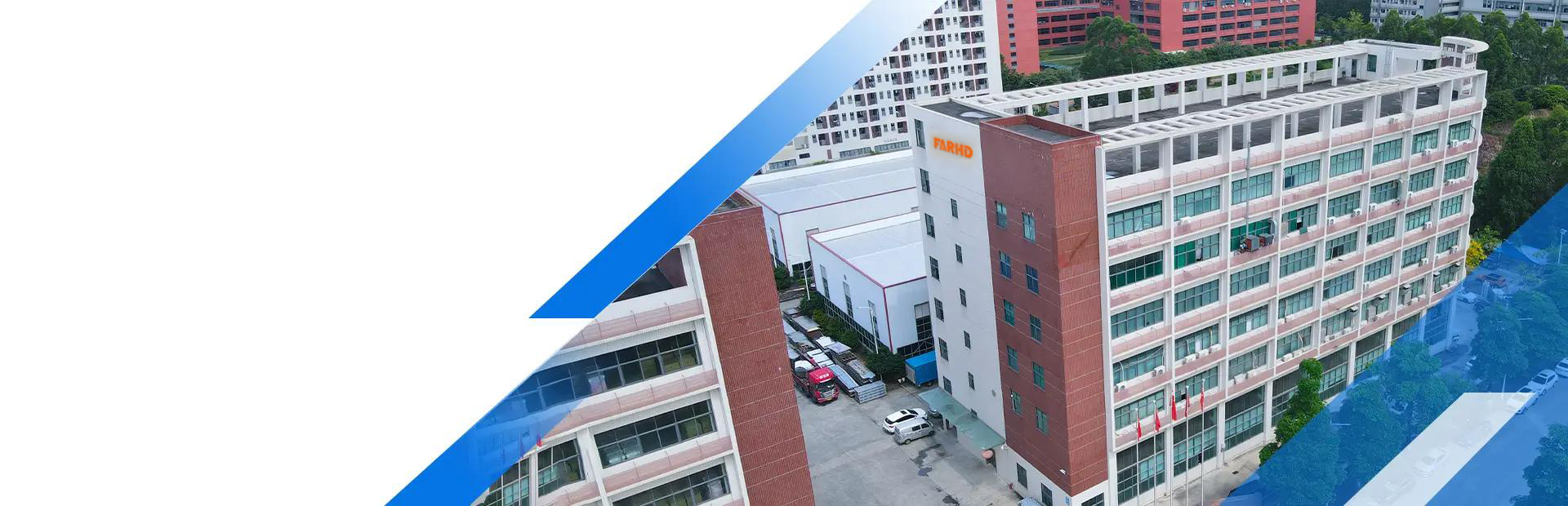
The building entrance outdoor station is the most-used device in an apartment intercom system. Residents pass it several times a day, visitors approach it without instruction, couriers use it under time pressure, and property managers rely on it to manage access for hundreds of households. It is also the device most exposed to weather, wear, and the daily reality of a shared entrance.
FARHD’s new IP apartments building entrance outdoor station is designed around that reality. It combines a 4.3″ IPS display, card and face recognition unlock, and an integrated rain cover in a unit built for apartment building entrances—a practical configuration that serves residents, visitors, and property staff without adding complexity at the door.
FARHD has manufactured video door phones and intercom systems since 1998, with 28 years of experience and full in-house R&D and production of core components—including TFT LCD screens, driver boards, and camera modules. That vertical integration is what allows the display, camera, access control, and housing to be designed as one coordinated system rather than assembled from parts with different priorities.
Why the Building Entrance Needs a Purpose-Built Outdoor Station
An apartment building entrance is a demanding environment in ways that a single-house doorbell never encounters.
High interaction volume. A 200-unit building may see hundreds of interactions per day at the main entrance—calls, card taps, face verifications, and access releases. The station must respond consistently under that load.
Mixed user groups with different habits. Residents want fast, hands-free entry. Visitors need to reach the right apartment without staff help. Couriers need speed. Property staff need managed access. A single interface has to serve all of them.
Constant population change. New residents arrive, tenants leave, cards are lost, contractors need temporary access. The access control system must be manageable, not just functional.
Weather exposure. Building entrances face rain, wind-driven spray, dust, and direct sun. An outdoor station without adequate protection degrades—first in appearance, then in function.
Installation and service access. The station is mounted at an exposed entrance. Cable entry, weather sealing, and service access all affect long-term reliability.
The new outdoor station is designed around these five realities, with each feature addressing a specific operational need.
4.3″ IPS Display: Readable, Clear, and Practical
The 4.3″ IPS display is the station’s primary interface, and the IPS panel technology matters more than the size alone.
Why IPS Instead of a Standard LCD
IPS (In-Plane Switching) panels offer wider viewing angles and more consistent color than standard TN panels. In practice, that means:
Readability from an angle. Visitors do not always stand directly in front of the display. They approach from the side, step back to look for a room number, or stand slightly off-center while holding a package. An IPS panel remains readable across a wider range of viewing positions, so the instructions and prompts are visible regardless of approach angle.
Consistent color and contrast. Outdoor lighting changes throughout the day. IPS panels maintain more consistent color and contrast under varying conditions than TN panels, which shift noticeably as the viewing angle changes.
Clear prompts and feedback. The display shows call instructions, access method prompts, and status feedback. A panel that renders text and icons clearly reduces hesitation at the door—particularly for first-time visitors who are already uncertain about how the system works.
Better appearance. An IPS display reads as a more modern, higher-quality product. At a building entrance, the outdoor station is a visible element of the property’s presentation, and display quality contributes to the perceived standard of the building.
Because FARHD produces TFT LCD screens in-house, display quality—brightness, viewing angle, color accuracy, and response—is controlled at the component level rather than accepted as whatever the panel supplier provides. For a device that operates continuously and is exposed to outdoor light conditions, that control matters.
Card and Face Recognition Unlock: Two Access Paths for Different Users
The new outdoor station supports two independent access methods: card unlock and face recognition. Each serves a different user group, and together they cover the range of access needs in an apartment building.
Card Unlock: The Workhorse of Apartment Access
Card access remains the most widely used credential in residential buildings. It is fast, familiar, and works for residents, staff, and contractors without requiring biometric enrollment or smartphone compatibility.
In an apartment context, card access is valuable for:
- Residents who prefer a familiar, quick tap at the door
- Domestic and property staff who need managed access without depending on a phone app
- Contractors who require temporary authorization
- Residents who decline face enrollment — an important consideration for privacy and consent
Card management is designed for the people who actually perform it: property managers. New cards can be issued and lost, stolen, or expired cards can be deleted without complex procedures—closing the most common access control gap in residential buildings, where a departed tenant’s card remains active because removing it is inconvenient.
Depending on configuration, the system supports 13.56MHz IC and 125kHz ID cards, allowing partners to match the card type to local market practice.
Face Recognition: Hands-Free Entry for Daily Convenience
Face recognition gives residents hands-free entry—particularly valuable when carrying shopping, a child, or a bicycle. For buildings with high foot traffic, it also speeds up entry compared with card tapping or calling the monitor.
But face recognition performance depends on factors that the installer controls as much as the manufacturer:
Camera placement and angle. The camera should capture faces at the typical approach height and angle, without requiring residents to stoop or stand at a precise spot.
Lighting verification. Recognition should be tested at the actual entrance during the day, at night, and in backlit conditions—particularly at west-facing or glass-fronted lobbies.
Enrollment quality. A clear, front-facing enrollment image under reasonable lighting produces reliable recognition. Enrollment should be repeatable when a resident’s appearance changes significantly.
Matching threshold configuration. A higher threshold reduces false accepts but increases false rejects. For an apartment entrance, the balance should favor reliable recognition for enrolled residents while keeping card access available as a fallback.
Privacy and consent. Face enrollment should be voluntary, with card access available as an alternative, and the building operator should document consent and define a retention policy. The system should make these steps practical rather than burdensome.
Why Both Methods Matter
A card-only system fails when a card is lost. A face-only system excludes residents who decline biometric enrollment and struggles in poor lighting. Supporting both means the entrance keeps working when one path is unavailable, and each resident takes the route that fits them.
For property managers, the combination also reduces support calls. The most common access complaints in apartment buildings are “my card stopped working” and “the face recognition doesn’t recognize me”—and having a second path available resolves most of them without a site visit.
Rain Cover: Weather Protection That Is Part of the Design
The integrated rain cover is a detail that separates a product designed for outdoor installation from one that was designed for a showroom and then mounted outside.
Why the Rain Cover Matters
An apartment building entrance is exposed to weather year-round. Rain, wind-driven spray, and dust reach the station regardless of the building’s orientation. A rain cover provides a physical barrier that:
Deflects direct rain from the display and camera window. Water droplets on the display reduce readability; droplets on the camera window degrade image quality and face recognition performance.
Reduces water ingress risk at the top edge. The top of an outdoor station is where water tends to collect and where gaskets face the most stress. A cover reduces the water volume reaching the seal.
Shadows the display from direct sun. Beyond rain, direct sun can wash out a display and raise internal temperatures. A cover provides shade that improves readability and thermal behavior.
Extends the service life of the housing and finish. Reduced exposure to standing water and direct sun slows the degradation of the housing appearance—relevant for a device that is a visible element of the building’s entrance.
Rain Cover and IP65: Complementary, Not Redundant
The station carries IP65 water resistance certification alongside CE, FCC, RoHS, and EMC certifications. IP65 means dust-tight and protected against low-pressure water jets from any direction.
The rain cover complements the IP65 rating rather than replacing it. The rating defines what the enclosure can withstand; the cover reduces the exposure that the enclosure must withstand. Together, they provide a more reliable installation than either alone—particularly at exposed entrances where wind-driven rain can reach angles that a water-jet test does not fully represent.
A practical note for integrators: the IP65 rating is realized only when the cable entry is executed correctly. Proper weatherproof glands, entry from below or from the rear where the structure allows, and a drip loop where cable approaches from above are installation practices that protect the rating in service. FARHD’s technical support group can advise on installation practice during commissioning.
Where This Outdoor Station Fits
The new outdoor station is positioned for apartment building entrances, and it suits a range of residential applications:
Apartment building main entrances — the primary use case, where card and face recognition serve residents, staff, and visitors at a shared entrance.
Multi-building communities — where each building entrance has its own station, with directory scoping and address coding ensuring calls route to the correct apartments.
Residential buildings with high foot traffic — where face recognition speeds entry and card access provides a reliable fallback.
Buildings with managed access — where property managers need to issue and revoke credentials routinely.
Retrofit and renovation projects — where the station’s installation flexibility and rain cover suit an existing entrance structure.
Mixed residential and commercial buildings — where the entrance must serve residents and business visitors with different access expectations.
For integrators, one station that serves multiple apartment building configurations simplifies specification and stocking. For distributors, it means a product that fits the mainstream apartment segment without requiring a separate product line for each building type.
Integration with the Broader IP Apartment System
The new outdoor station is designed to work within FARHD’s IP apartment video intercom architecture, alongside the indoor monitors, guard station, and management center.
With 7″ and 10″ indoor monitors — residents receive calls on the newly designed UI, with clear identification of the entrance source, app binding for remote access, and 128GB memory card support for call history and visitor records.
With the 8″ Guard Station — the management desk can coordinate with the entrance station, and the Guard Station’s USB camera support adds a visual presence at the desk.
With the management center — card issuance, face registration, directory generation, room number configuration, and access records are managed through the same administrative interface, keeping the workflow consistent across devices.
With per-apartment second doorbells — in buildings where each apartment supports a second video doorbell, the entrance station handles the shared perimeter while the second doorbell covers the apartment door.
For integrators, this means one system architecture, one management interface, and one support channel—rather than an entrance station from one vendor, monitors from another, and an access control system from a third.
Built on FARHD’s Manufacturing Foundation
The new outdoor station comes from FARHD, a professional video intercom manufacturer founded in 1998 with 28 years of experience in video door phones and intercom systems.
FARHD specializes in full in-house R&D and production—from TFT LCD screens, driver boards, and camera modules to complete villa and apartment building intercom systems. The product line covers IP intercom systems for villas and apartments, 2-wire IP systems, 4-wire CVBS and AHD systems, analog apartment systems, wireless video doorbells, audio intercom systems, and various kits.
Products hold international certifications including CE, FCC, RoHS, IP65 water resistance, and EMC. Every unit undergoes a 24-hour aging test before shipment—a production step that catches early-life defects in the factory rather than at a resident’s entrance.
Supported by 28 direct sales branches across China, FARHD has completed over 10,000 large-scale building video intercom projects, including ultra-large communities with 1,000, 3,000, and even over 5,000 households. That project experience informs products designed for real installation and operational conditions—room numbering, directory scoping, card lifecycle management, and commissioning documentation.
For partners building a private-label product line, OEM and ODM services cover customized software and hardware development, UI design, functional module adjustments, and tailored packaging solutions. Because core components are produced in-house, customization can extend beyond branding and packaging to display specifications, driver board configuration, and functional behavior. SKD solutions are available for assembly factories across Europe, the Middle East, South America, Southeast Asia, the United States, Russia, India, Iran, Turkey, South Korea, and Italy, helping reduce production and tariff costs.
A hassle-free after-sales service system ensures that upon product delivery, a dedicated technical support group is established to assist with programming, device installation, and wiring connections throughout the process.
A Practical Entrance Station for Apartment Projects
The new IP apartments building entrance outdoor station brings together the elements that apartment entrances actually need: a 4.3″ IPS display that stays readable from any approach angle, card and face recognition unlock that serves different user groups, and an integrated rain cover that protects the device in the environment where it is installed. Its compatibility with FARHD’s indoor monitors, guard station, and management center makes it a practical addition to an existing system rather than a standalone device.
For distributors, integrators, and developers evaluating it for upcoming apartment projects, the next step is a sample and a conversation about the specific building—unit count, entrance configuration, access method mix, and installation conditions. Those details determine the configuration, and they are best discussed before the specification is finalized.
Samples and technical documentation are available on request.
We look forward to building a strong partnership with you and jointly shaping the future of smart living.
Email: info@farhd.com
Website: www.farhd.com
WhatsApp: +86 188 2370 9809 / +86 199 2545 1918
Post time: Nov-20-2026